
The Two Interacting Architectures
Two Powerful Systems Shape Whether Women Thrive at Work
Women at Work By Design partners with organisations to see the whole picture and redesign the conditions that determine whether women can remain, rise and thrive.
Leadership Development
Burnout Prevention
Organisation Design
Corporate Restreats
Women’s Careers Are Shaped From the Outside and Within
Women’s experience of work is shaped by two powerful systems: the organisational architecture around them and the internal architecture they bring into the workplace.
When these systems interact without being understood, capable women can become progressively depleted, step back from advancement or leave at the height of their careers.
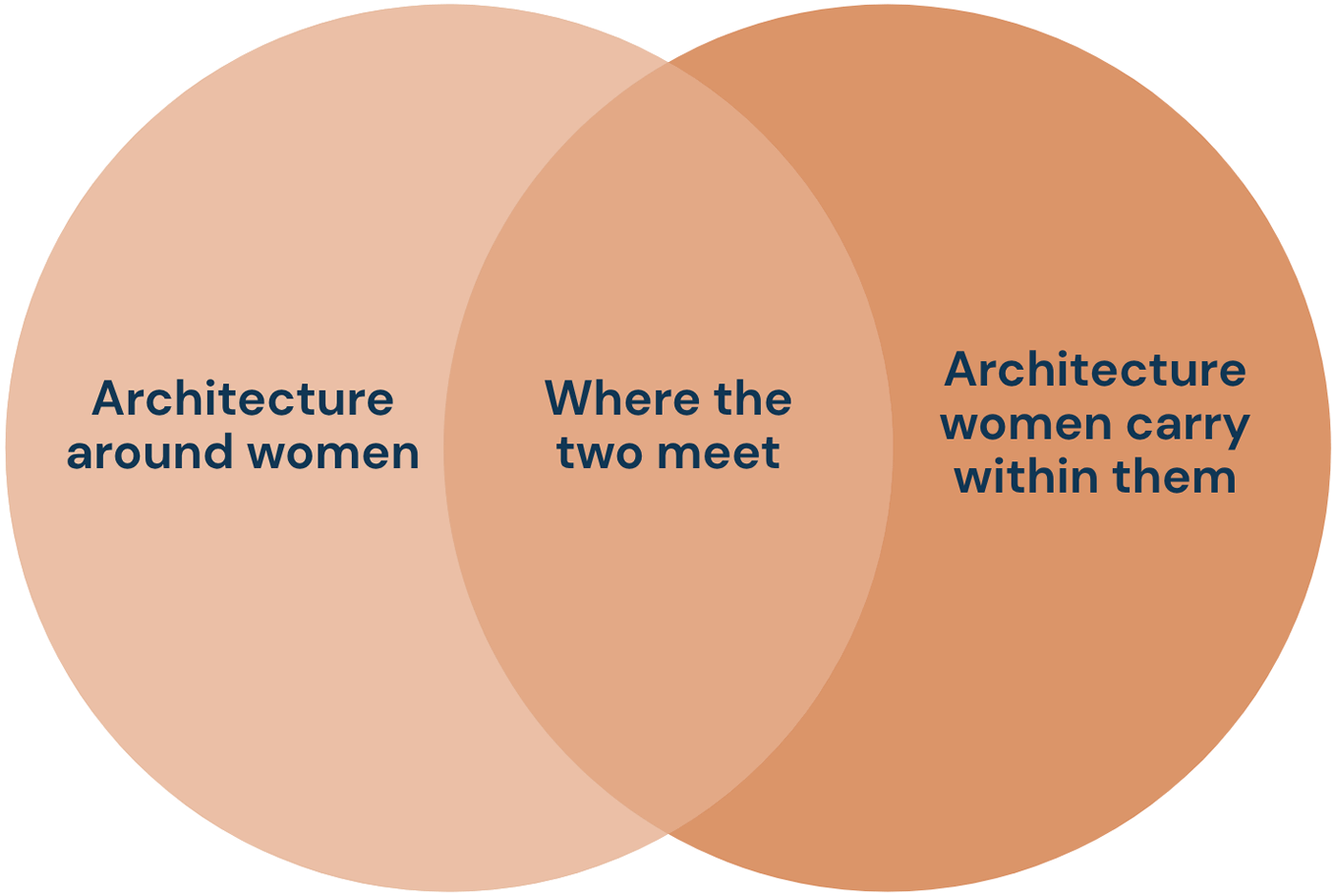
The Organisational Architecture Around Women
Leadership and authority
How decisions are made, who is trusted with influence and which leadership behaviours are recognised.
Work design and pressure
How work is allocated, how urgency is managed and where responsibility accumulates.
Recognition and progression
How contribution is valued, how performance is measured and who is seen as ready for advancement.
Culture and expectations
The difference between the culture an organisation describes and the behaviours it rewards, tolerates or normalises.
Flexibility and care
Whether flexibility is genuinely supported or accompanied by informal penalties to visibility, credibility and progression.
Psychosocial safety
How risks are identified, controlled and prevented before pressure becomes depletion or career withdrawal.
These systems may appear neutral while continuing to reflect assumptions about the ideal worker, the ideal leader and the personal sacrifices required for success.
Start a ConversationThe Hidden Architecture Women Carry Within Them
The need to prove competence
Continuing to over-prepare, over-deliver or demonstrate value long after capability has already been established.
Perfectionism and fear of failure
Experiencing mistakes, criticism or uncertainty as threats to credibility, belonging or advancement.
Over-responsibility
Taking ownership of outcomes, relationships and problems that sit beyond the boundaries of the role.
Emotional and relational load
Absorbing tension, supporting colleagues and managing the emotional climate of teams without this contribution being formally recognised.
Physiology and nervous-system capacity
Managing the impact of chronic pressure, life stages, hormonal change and sustained demands on physical and emotional capacity.
Boundaries and self-suppression
Prioritising the needs of the organisation, team or family while minimising personal limits and needs.
Endurance as a measure of success
Holding the belief that resilience means continuing to cope, regardless of the personal cost.
These patterns, beliefs and gaps in understanding are not personal defects. They are often intelligent adaptations to the environments in which women have learned to live, work and lead.
Start a ConversationBurnout and Career Attrition Develop at the Intersection
Women’s burnout is rarely created by workload alone.
It develops through the interaction between workplace demands, leadership expectations, personal conditioning, physiological capacity, invisible responsibility and the need to continually adapt.
When both architectures remain unseen, organisations may misdiagnose what is happening.
Burnout may be treated only as an individual wellbeing issue, leaving workplace conditions unchanged.
Alternatively, it may be treated only as a systems issue, overlooking the beliefs, behaviours and physiological realities shaping how women experience those systems.
Meaningful change requires both.

At this intersection, organisations may see:
Women performing while becoming depleted
Strong performance can disguise declining capacity until burnout is already advanced.
Women opting out of advancement
The opportunity to progress may no longer feel worthwhile when leadership appears to require constant availability, self-sacrifice or over-adaptation.
Senior women retiring or leaving early
Organisations lose experience, judgment, client knowledge, organisational memory and future executive capability.
Flexibility failing to improve retention
Formal flexibility may exist while informal expectations continue to reward visibility, availability and uninterrupted career pathways.
Relational labour remaining invisible
Women may carry significant mentoring, emotional and cultural responsibilities that are relied upon but rarely measured or rewarded.
Leadership programs producing limited change
Individual development cannot overcome organisational systems that continue to reward the same inherited behaviours.
Meaningful Change Requires a Different Approach

Why Policies and Resilience Programs Are Not Enough
Policies matter. Leadership development matters. Wellbeing support matters.
But none of these interventions can create lasting change when they operate in isolation.
Organisations can introduce flexibility, mentoring and inclusion initiatives while leaving unchanged the expectations that determine who is viewed as committed, capable or leadership-ready.
Women can strengthen their confidence, resilience and self-awareness while remaining inside systems that continue to rely on overwork, constant availability and personal adaptation.
Women at Work By Design partners with organisations to move beyond isolated initiatives by examining the relationship between women and the systems in which they work.

This Is Not About Fixing Women
Women do not need to become more resilient so they can tolerate unsustainable conditions.
Many of the patterns women carry developed as practical responses to environments that rewarded endurance, self-suppression, constant competence and over-responsibility.
The goal is not to make women more compliant within unchanged systems.
It is to support women to understand what has shaped them while helping organisations examine the conditions that continue to reinforce those patterns.
Women’s sustainability is created where self-understanding meets organisational responsibility.

Why Focus Specifically on Women?
It is a fair question. When organisations focus on women’s retention, burnout and leadership, some leaders ask whether this conflicts with equality.
Men are also affected by narrow expectations of strength, availability, leadership and performance.
But equality cannot be created by assuming the workplace was neutral to begin with.
For much of modern working history, organisations were structured around an ideal worker who was continuously available, largely unencumbered by care and able to prioritise work without interruption.
Leadership systems, career pathways and definitions of commitment developed around that assumption.
Women entered these systems while continuing to navigate social conditioning, caregiving responsibilities, biological realities and expectations that had not been incorporated into the original design.
Treating women and men identically inside a system that was not designed equally does not automatically create fairness. It can preserve the original design.
A women-centred approach is therefore not a departure from equality. It is a step towards creating it.

Better Outcomes for Women Create Stronger Organisations
When organisations redesign the assumptions beneath work and leadership, the benefits extend beyond women.
Organisations can create:
- Stronger retention of experienced women
- More sustainable leadership pipelines
- Earlier recognition of burnout and depletion
- Reduced avoidable talent loss
- More effective psychosocial risk management
- Better alignment between organisational values and lived experience
- Healthier expectations around authority, availability and performance
- More human and sustainable workplaces for everyone
Men gain greater permission to lead without performing invulnerability.
Women are no longer required to succeed through continual over-adaptation.
Organisations retain capability and create a stronger foundation for sustainable performance.

See the Whole System. Change What Happens Within It.
Women cannot be expected to continually adapt to environments that were not designed around the realities of their lives.
Organisations cannot retain women without understanding both the systems shaping work and the personal forces shaping how women experience those systems.
Women at Work By Design supports organisations to bring both architectures into view and translate that understanding into practical change.
Start a Conversation
Create a Workplace Women Do Not have to Survive in Order to Succeed
When You Get in Touch, You Can Expect:
A no-pressure chat to explore how we can assist your organisation
We’ll explore your organisation’s current challenges and priorities
Guidance on the most relevant consulting, program or workshop pathway