
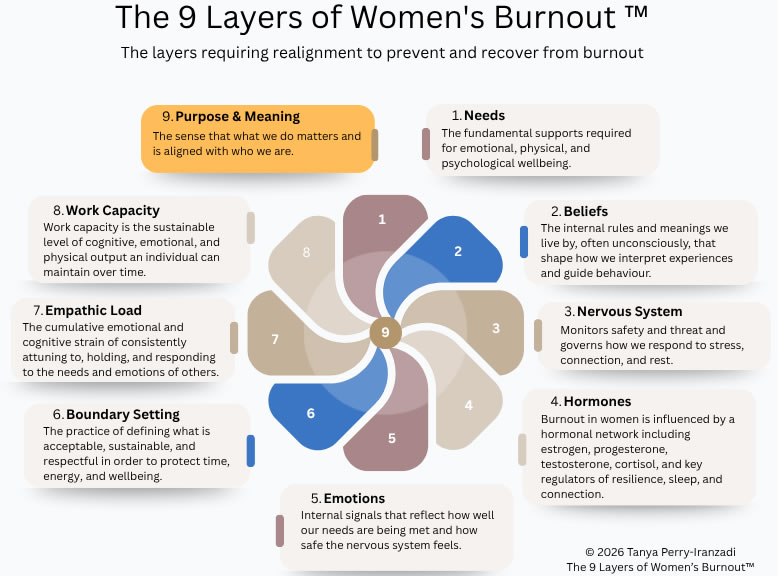
A woman can be successful, capable, respected and still feel the quiet collapse of meaning underneath it all. She can keep performing, keep delivering, keep leading and keep carrying what others depend on and still find herself asking, often silently: What is the point of all this? This is one of the least understood layers…
Author Archives: Tanya Perry-Iranzadi
The 9 Layers of Women’s Burnout
Layer 8: Work Capacity – When Capacity Erosion Becomes a Financial Security Issue
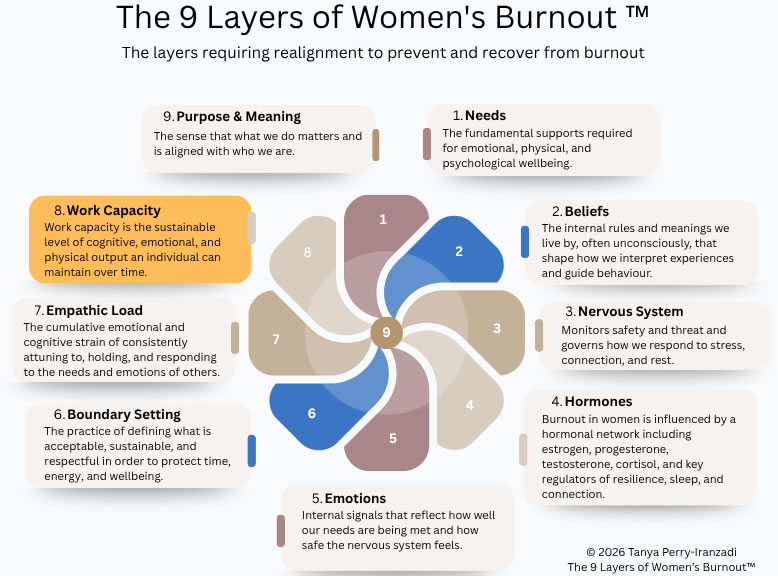
The Career Cost of Ignoring Women’s Work Capacity Across Midlife One of the most expensive mistakes in women’s careers is the belief that work capacity is fixed, endless, or irrelevant so long as performance still looks intact. It is not. For many women, the cost of ignoring this becomes visible in the exact years they…
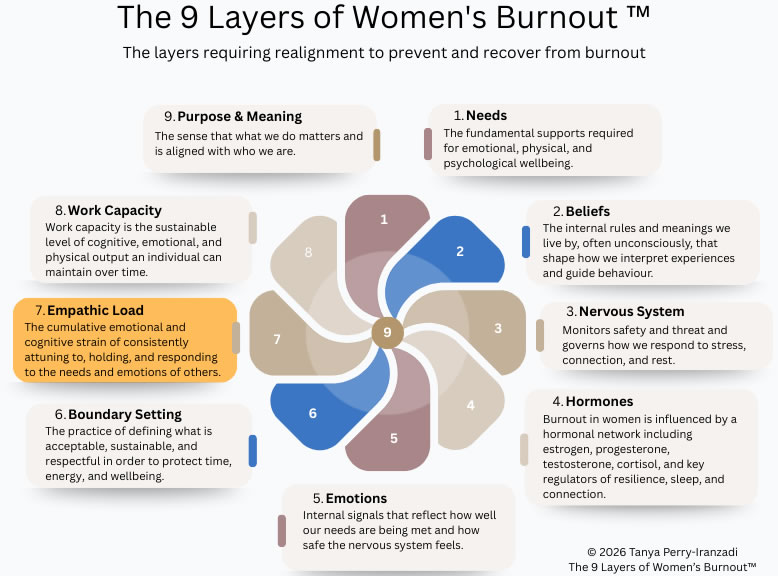
There is a form of work many women perform every day that rarely appears in job descriptions. It is not technical work. It is not strategic work. And it is almost never recognised as labour. It is empathic work. Empathic load is the cumulative emotional and cognitive strain of constantly attuning to, holding, and responding…
The 9 Layers of Women’s Burnout
Layer 6: Boundary Setting – Protecting time, energy, and sustainable capacity
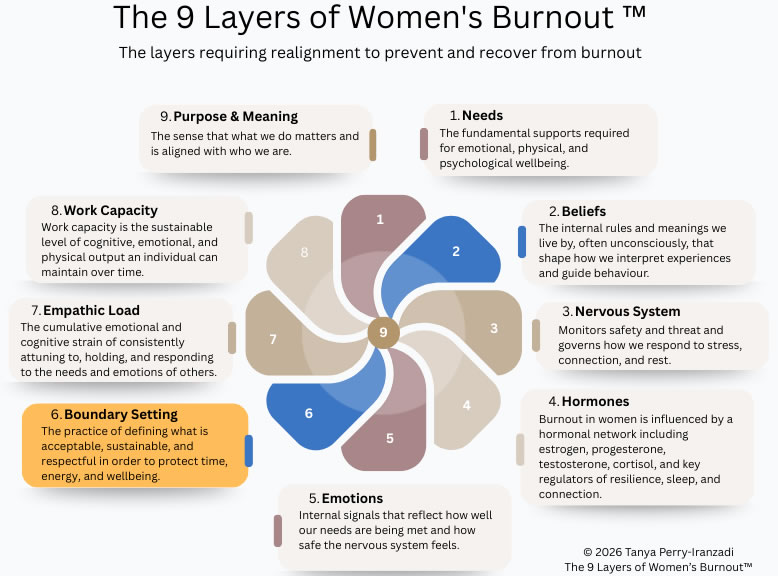
One of the most confusing aspects of women’s burnout is this: Many high-performing women can set clear boundaries at work and in the boardroom but struggle to hold them everywhere else. The difference, managing the company resources is one thing managing our own energetic resources is another. Boundaries are often framed as a personality trait…
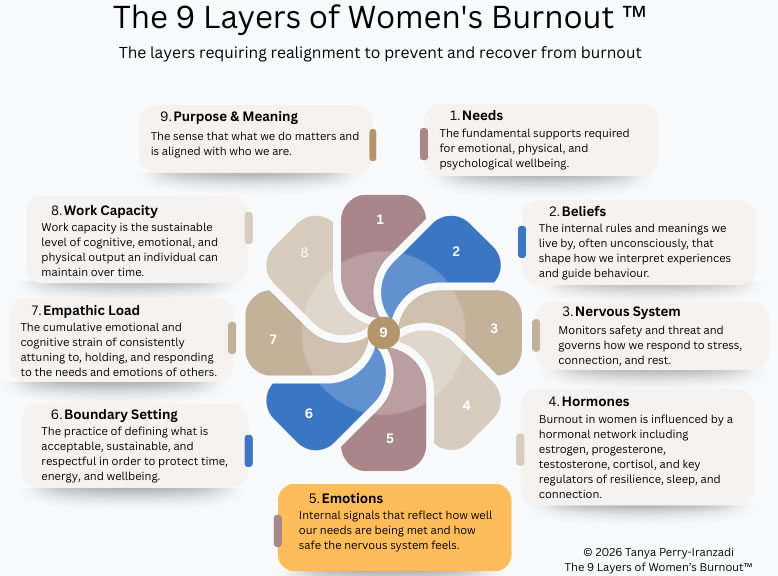
Not as weakness. Not as overreaction. Not as something to “manage better.” But as data. Emotions are internal signals. They reflect how well our needs are being met and how safe our nervous system feels. Burnout does not begin with exhaustion. It begins when emotional signals are repeatedly overridden. Frustration when boundaries are crossed. Resentment…
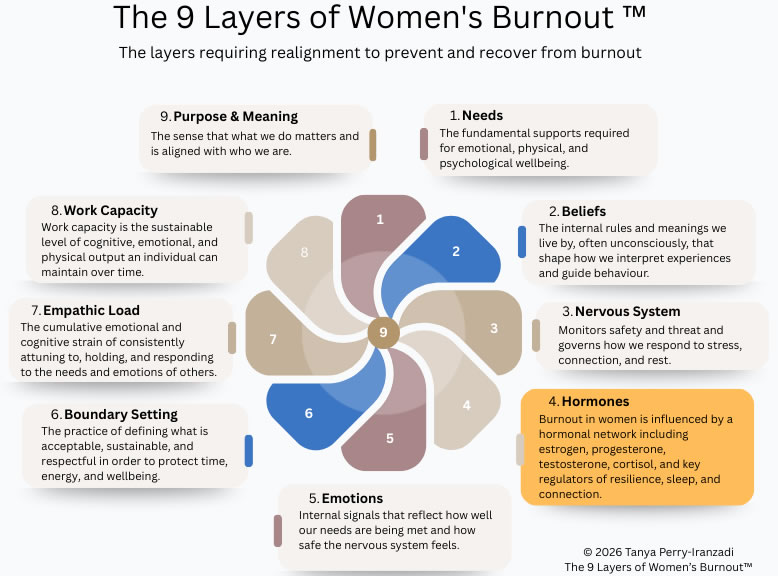
Burnout in women is not just psychological. It is biological and one of the most misunderstood layers is hormones. Not in the stereotypical “she’s hormonal” sense. But in the reality that hormones regulate energy, cognition, mood, resilience, and recovery. When this layer shifts capacity directly reduces, and many high-performing women experience this shift in silence…
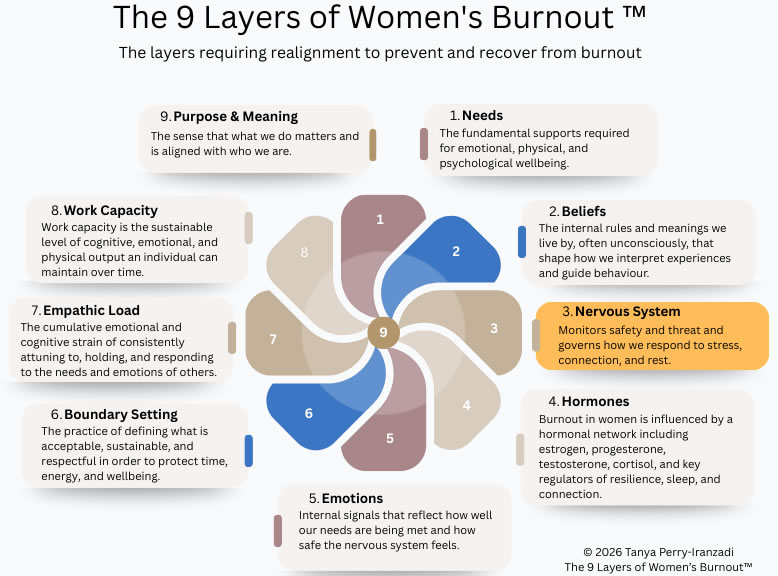
Layer Three: The Nervous System Burnout doesn’t begin with workload. It begins with a nervous system that has been asked to stay “on” for too long. Not for a day. Not for a quarter. For years. The Woman Who “Can Handle It” Emma is a senior leader. A mother of two teenagers. The calm one…
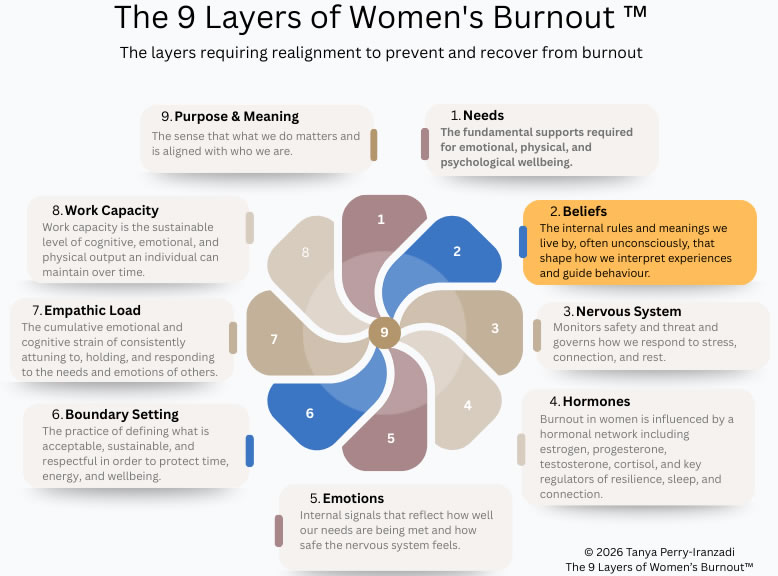
Beliefs can either drain your energy or multiply it Most women I work with don’t burn out because they’re unskilled or incapable. They burn out because of the beliefs they’re operating by …unconsciously. Beliefs like: • I have to cope. • Rest has to be earned. • If I say no, I’ll disappoint. • My…
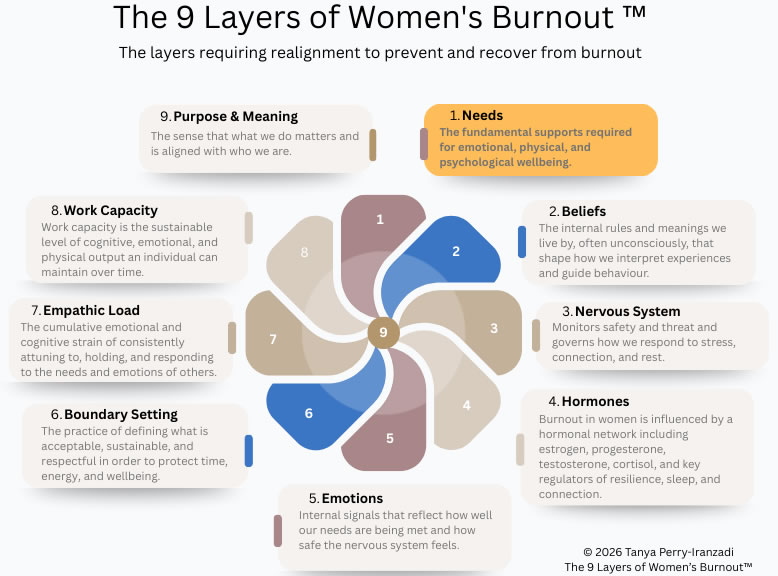
A woman once said to me, quietly: “Nothing is actually wrong… but I’m exhausted all the time.” She was performing well at work, supporting her partner and children and sharing time with friends and family. From the outside, her life looked functional. From the inside, something was slowly eroding. Burnout in women is often explained…
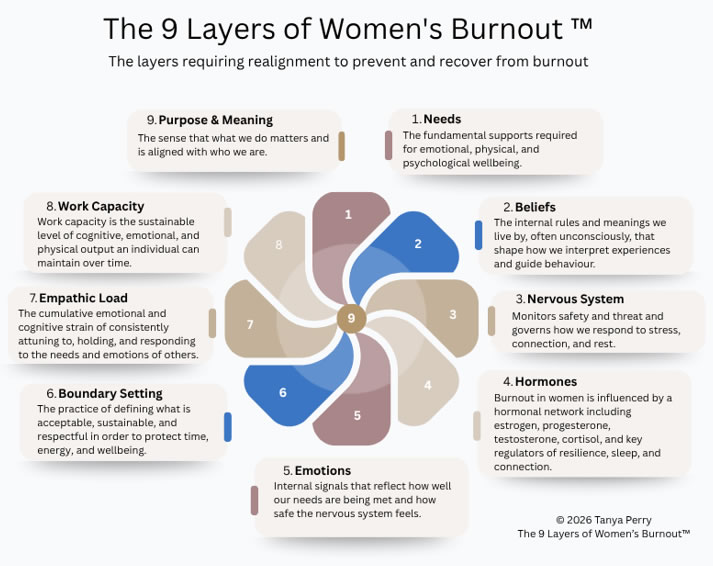
Introducing the 9 Layers Behind Women’s Burnout For a long time, women’s burnout has been explained as a failure of resilience. Work harder. Rest better. Set boundaries. Practice self-care. And yet, many capable, high-performing women continue to burn out even after they’ve done all the right things. That’s because burnout is rarely caused by a…